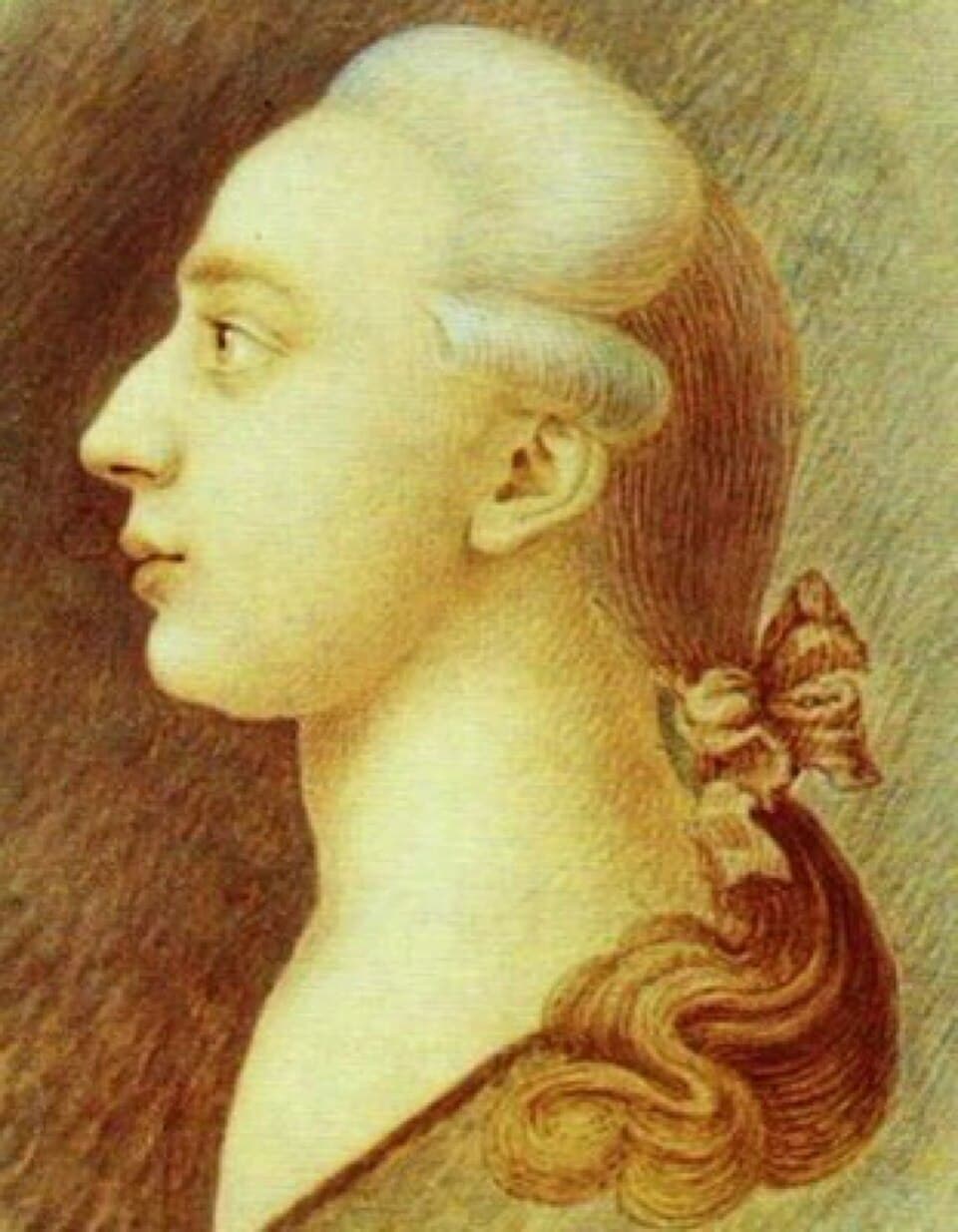
Francesco Casanova · portrait drawing, 1750s · public domain
1789–98 · Bohemia
Giacomo Casanova
What his memoirs really show
The memoirs are about 3,700 pages long. He wrote them in his sixties, as a castle librarian, on a doctor's advice against low spirits. Scholars count about 120 love affairs in the pages, and they fill about a third of the book. Historians have confirmed most of its people and events. The pages do not show conquest. They show a huge interest in other people: he asked questions, he enjoyed things easily, and he left before he was unwelcome.
Source · Histoire de ma vie; Smithsonian; Ian Kelly, Casanova
Principle 05 · our reading
Enjoying things is a skill
Taught in Topic 02 · Conversation Craft
Why we teach it
Asking questions, and follow-up questions most of all, measurably increases how much people like you (Huang et al., Harvard, 2017). This technique has the best evidence of any in the whole course.
The exercise
Ask a second question about the same subject before you say anything about yourself. Then be the first to end the conversation, warmly.
The warning
He was a gambler and a fraudster. He was often careless with the people in these pages, and he is the one telling the story. Copy the quality of his attention, not his habit of escaping responsibility.
Who Casanova was, and why we chose him
1725 – 1798
He was a Venetian writer and adventurer. In a long and unsettled life he was a student priest, a soldier, a violinist, a spy, a gambler, a fraudster and finally a castle librarian in Bohemia. He escaped from the Doge's prison in 1756, and he retold that story for the rest of his life. In his sixties a doctor advised him to write as a cure for low spirits, and he wrote Histoire de ma vie, about 3,700 pages. That book is the reason he is remembered as a lover and not as any of the other things he was.
Why we chose them · our reading
The memoir is a better book than his reputation suggests, and the reputation misunderstands how he did it. The pages do not show conquest. They show a huge interest in other people. He asked questions, he enjoyed things easily, and he left before he was unwelcome. That is a skill, and it can be taught. His habit of escaping responsibility cannot.
Casanova’s principle is practiced in Topic 02, Conversation Craft: a 2:22 video and 10 real-life exercises.
The other masters
- Ovid — The first book anyone wrote about this
- Cleopatra VII — She made him come to her
- Ninon de l’Enclos — She ended things warmly, on purpose
- Madame de Pompadour — She brought a world with her
- Lord Byron — Why being unavailable is not a strategy
- Gabriele d’Annunzio — Proof that attention matters more than looks
- Grigori Rasputin — His enemies invented most of his legend
- Marilyn Monroe — She could switch it on
- Joséphine Baker — Being playful worked better than being polished